 English
 Indian
 العربية
 Español
 Deutsch
 Türkçe
 Русский
 Français (Afrique)

Ballon d’Or 2026 : Safonov, Courtois, Martinez… et la surprise Vozinha parmi les 10 nommés au Trophée Yachine
Des habitués du très haut niveau, des champions du monde, d’anciens lauréats et une immense surprise : la liste des dix nommés au Trophée du Gardien de la saison, dans le cadre du Ballon d’Or 2026, offre un casting particulièrement relevé. Matveï Safonov, Thibaut Courtois, Emiliano Martinez, Yassine Bounou ou encore Édouard Mendy sont au rendez-vous. Mais cette sélection est aussi marquée par la présence de Vozinha, le gardien cap-verdien de 40 ans devenu l’une des grandes sensations du dernier Mondial.
Les habitués sont au rendez-vous
Dans cette liste, plusieurs visages connaissent déjà parfaitement les honneurs du Trophée du Gardien. Thibaut Courtois, récompensé en 2022, est nommé pour la cinquième fois, tandis qu’Emiliano Martinez peut décrocher une troisième couronne après ses sacres de 2023 et 2024. Le portier argentin a notamment remporté la Ligue Europa avec Aston Villa. Yassine Bounou, troisième en 2023, conserve lui aussi une place parmi les références du poste après une nouvelle saison particulièrement régulière avec Al-Hilal, marquée par 30 clean sheets en 58 matches.
Édouard Mendy possède également un dossier solide. Le Sénégalais a remporté la Ligue des champions asiatique et la Supercoupe d’Arabie saoudite avec Al-Ahli, tout en réalisant 28 matches sans encaisser de but. Unai Simon, deuxième en 2024, peut quant à lui s’appuyer sur un argument majeur : le sacre mondial de l’Espagne. David Raya a également remporté la Coupe du monde et le championnat d’Angleterre avec Arsenal, même s’il a vécu le tournoi mondial dans l’ombre de son compatriote. Gregor Kobel, deuxième nomination, complète ce groupe de gardiens déjà installés parmi les meilleurs du monde. syntagm.co.za
Safonov, Garcia… et le conte de fées Vozinha
La sélection récompense aussi deux nouveaux visages particulièrement intéressants. Arrivé au Paris-SG, Matveï Safonov a progressivement gagné en importance et participé à la formidable saison du club parisien, vainqueur notamment de la Ligue des champions, de la Coupe intercontinentale et de la Supercoupe d’Europe. Joan Garcia, de son côté, s’est installé dans les buts du FC Barcelone et a accompagné le club catalan jusqu’aux titres de champion d’Espagne et de Supercoupe d’Espagne, ainsi qu’au sacre mondial de la sélection espagnole.
Puis il y a Vozinha. À 40 ans, le Cap-Verdien apporte une histoire totalement différente à cette liste. Encore en Deuxième Division portugaise avec Chaves avant son départ pour Colo-Colo cet été, le gardien a profité de quatre matches au Mondial pour passer du statut de parfait inconnu à celui de véritable phénomène. Ses performances lui ont valu une place dans l’équipe type de la compétition et une popularité fulgurante sur les réseaux sociaux. Sa nomination constitue déjà une récompense exceptionnelle pour un parcours qui ressemble à un véritable conte de fées. Reste maintenant à savoir jusqu’où cette sensation pourra pousser sa candidature face aux références établies du poste.
The post Ballon d’Or 2026 : Safonov, Courtois, Martinez… et la surprise Vozinha parmi les 10 nommés au Trophée Yachine appeared first on AfricaFootUnited.
‘There’s no Brodie to fix All Blacks set-piece’
At odds with World Rugby’s views on scrum laws, Dave Rennie says the buck stops him as New Zealand look to avoid more punishment from the Springboks on Saturday.
Last week’s 29-24 loss at FNB Stadium handed South Africa a 2-1 series lead in the Rugby’s Greatest Rivalry, the Boks powering to victory on the back of a first-half penalty try and a ferocious second-half maul finished off by Malcolm Marx.
Speaking in the build-up to the finale, Rennie didn’t shy away from where the Kiwis came up short in Joburg.
KIWI SCRIBE: All Blacks can’t play with ‘big boys’
“I mean, the buck stops with me in the end. I think that scrum [last week]; you have a look at that scrum, we were poor and got punished,” he told the media in an online conference. “It’s a pretty easy decision for the referee, to be honest.”
The maul was equally costly, Rennie explained, pointing to a defensive read that broke down entirely.
“The maul, we competed in the middle and we’re supposed to compete at the tail on that one. The reason is, given the front, we can defend the front. But we went up in the middle and then we had no one in front of that maul once it started, and so we never recovered.
“Considering where that started and where that finished, we should do better.”
He admitted part of that breakdown comes down to experience missing from his pack. “There’s no Brodie Retallick and Sam Whitelock out there who can say, ‘Oh, they’re defending a little bit differently, let’s go to this or that’.
“That’s where we’re at, and we’ve got to develop those guys quickly. We’ve got no option. This set-piece has to be better and so we can’t hide from it.”
JK: Carter defensive errors really cost us
Rennie, though, remains conflicted by World Rugby’s take on how the scrum is being judged.
“We can talk about scrums, but clearly our view and the view of World Rugby and the officials is different, so you just have to deal with that,” he said.
“They don’t see it the way we do and they’re the ones that matter on game day, so we will have to be better.
“I just don’t want it to be the big topic. We’ve got to be better. We’ve got to be more accurate and limit the number of scrums they have.
“I don’t really want to talk about the scrum because in the end that was not the deciding factor [last week]. That maul where they scored under the posts – that was a big moment in the game.”
Photo: Floris van Schouwenburg/Gallo Images
The post ‘There’s no Brodie to fix All Blacks set-piece’ appeared first on SA Rugby magazine.
How MLBB built an esports empire across Southeast Asia
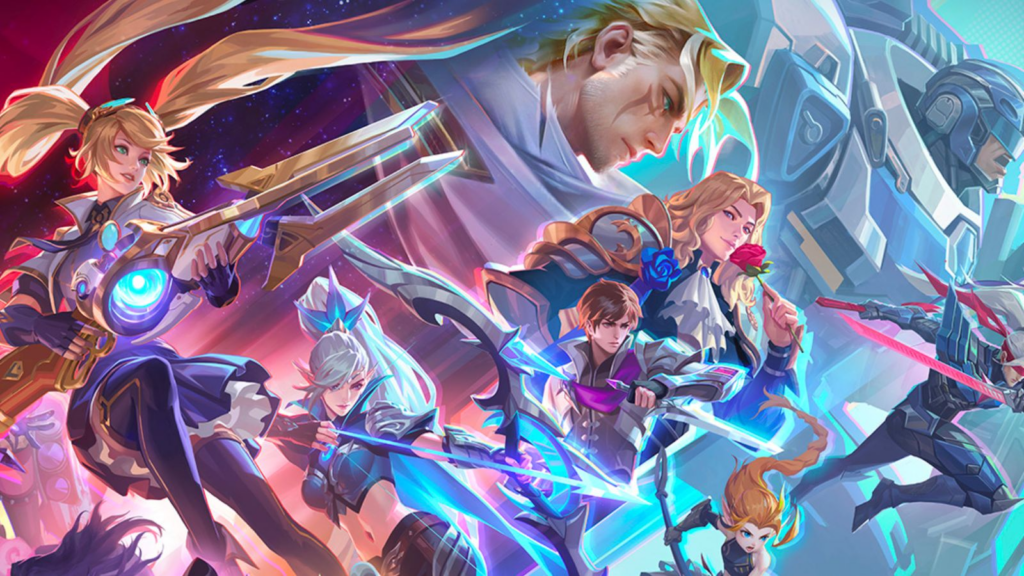
Mobile Legends: Bang Bang (MLBB) launched globally in 2016 and found extraordinary success in Southeast Asia (SEA), becoming one of the region’s biggest mobile esports titles.
Even as Free Fire led installs and Honor of Kings emerged as a major challenger, MLBB has remained SEA’s leader in engagement and revenue. It took a traditionally PC-heavy genre and made it accessible through shorter matches, low hardware requirements, and extensive optimization, lowering the barrier to entry for a new generation of MOBA players.
Over time, MLBB adapted itself to local cultures, turned casual play into community, and built an esports structure that gave players something to compete for. While its competitors can copy the mobile MOBA formula, reproducing the history, rivalries, and communities that have developed around MLBB is much harder.
MLBB was built for a mobile-first market
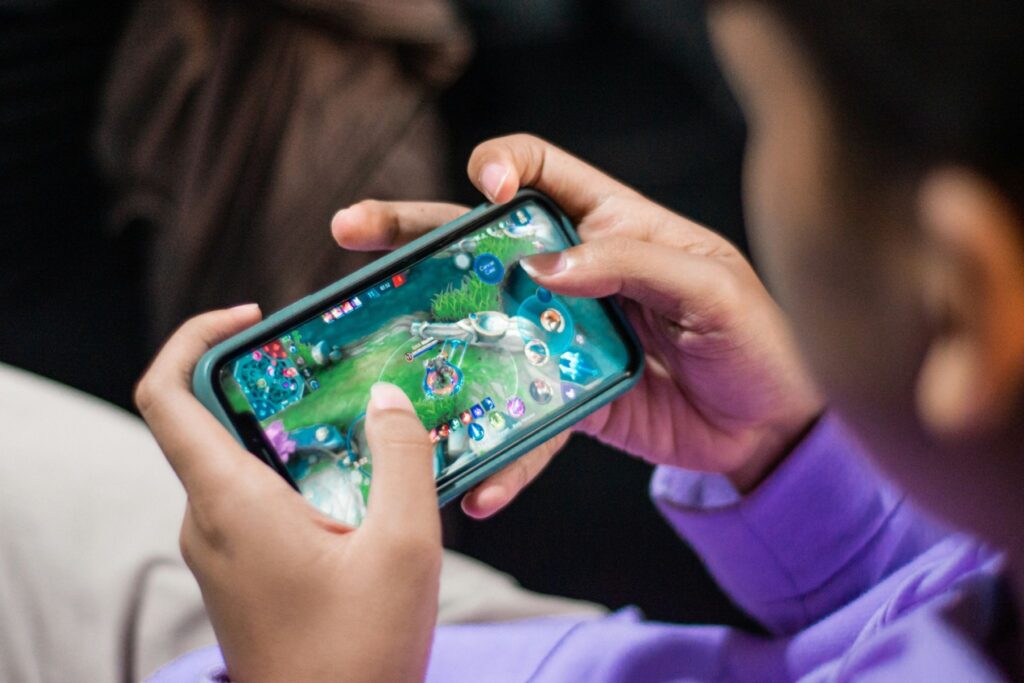
MLBB was particularly well suited to SEA because of its mobile accessibility and shorter match format.
For starters, SEA is a mobile gaming powerhouse, recording approximately 1.93 billion mobile game installs in Q1 2025 (Sensor Tower, 2025). Mobile devices also generate roughly 70% of the region’s gaming revenue and account for more than half of all hours played (Mordor Intelligence).
MLBB‘s success in SEA has also been unusually persistent. It remained among the region’s top five mobile games by downloads throughout 2017–2025. It ranked No. 1 in mobile-game revenue in six of the nine periods shown (Sensor Tower, 2025). MLBB also has over 35 million monthly active users (MAU) in Indonesia, 15 million in the Philippines, 10 million in Malaysia, 5 million in Thailand, and 1 million in Singapore.
MLBB lowered the barrier to MOBA play
Against that, MLBB offered a lower barrier to entry than MOBAs traditionally associated with PCs, such as Dota 2 and League of Legends. Instead of asking players to invest in expensive gaming hardware, Moonton optimized MLBB for mobile and made the genre accessible on devices that were already the preferred platform for play.
The format also fitted around how people used those devices. MLBB matches generally last 10–30 minutes, significantly shorter than PC MOBAs that can run up to an hour. More importantly, these shorter matches also gave MLBB players instant gratification, encouraging them to return (ISEAS-Yusof Ishak Institute).
The mobile gaming market in SEA became even more important during COVID-19, when restrictions disrupted access to traditional gaming spaces like internet cafes. For players already familiar with MOBAs, switching to MLBB felt like a natural transition. While that accessibility helped get players through the door, keeping them there required something more.
MLBB made itself locally relevant
MLBB has become a cultural symbol in SEA, with much of that success linked to the region’s gaming culture. Niko Partners reported that 87% of SEA gamers want some form of localization. MLBB did exactly that, going beyond simply translating text.
Instead, it brought extensive localized content and built a 130+ hero roster that includes characters inspired by regional history and folklore. Lapu-Lapu takes his name from the 16th-century Filipino chief who resisted Spanish colonization, Gatotkaca draws from the Javanese telling of the Mahabharata, and Badang is based on the legendary strongman of the Malay Annals.
Sensor Tower described this kind of hyper-localization as one of the keys to MLBB’s success, citing culturally relevant content, characters inspired by regional folklore, local tournaments, and community building.
However, localization extends beyond the game itself. ISEAS reported that Moonton adapts tournament operations to individual countries, including holding prayer ceremonies in Cambodia and Indonesia before event setups to respect local customs. These efforts have made MLBB feel local rather than simply available.
Bringing MLBB into popular culture
As MLBB’s characters and stories became tied to local culture, they also began reaching audiences beyond the game itself.
In September 2021, Moonton’s first animated series, Legends of Dawn: The Sacred Stone, aired on multiple television channels across SEA, following the hero Claude and his sidekick Dexter. That put MLBB’s heroes in front of audiences who had never touched the game and expanded the IP beyond the phone.
The relationship between MLBB and regional popular culture also worked in the other direction. Gatotkaca, now one of the game’s most recognizable heroes, was licensed in 2017 from Indonesian artist Is Yuniarto’s Garudayana comic series.
Moonton later published its own original title, Mobile Legends: Outlaw, in 2024, with a second animated series now in production. Together, these strategies helped make MLBB familiar even to people who had never queued for a match.
Community turned a popular game into a social space
Beyond cultural familiarity, MLBB understood the social importance of gameplay.
Indonesia arguably offered the clearest example. Playing games together is closely linked to the country’s “mabar” (short for main bareng) culture. MLBB’s 5v5 competitive format naturally fits into that behavior, turning ranked matches into something that friends can share rather than a purely individual progression system.
This social emphasis is supported by Niko Partners’ report, which found that 52% of SEA players watch gaming livestreams, while more than 45% want social features, such as in-game chat, rankings, or scoreboards. Beyond that, MLBB also makes competition feel local.
Rather than measuring MLBB players against an anonymous global ladder, local leaderboards allow them to compare themselves with players from their own town or city. A 2025 analysis from Universitas Brawijaya’s ASEAN Society Community described the game’s evolution from simple entertainment into a genuine cultural connector for the region’s youth.
- “Honor of Kings had its biggest year yet”: As HoK grows outside of China, the PC vs. mobile MOBA clash is heating up
- Janicka Gaming on bridging PUBG MOBILE’s community and its esports scene
- “Our preparation was pretty intense”: How Team Vitality’s MLBB roster breaks stereotypes about mobile gaming and women’s esports
Ranked play became national pride
Moonton began building MLBB’s competitive structure relatively early in the game’s life.
The first MLBB Southeast Asia Cup was held in 2017, before the Mobile Legends Professional League (MPL) circuits launched in Indonesia, Malaysia, and Singapore later that year. The Philippines followed with its own MPL in 2018.
What started with a regional competition soon developed into a much larger ecosystem. Today, MLBB has domestic MPL leagues, the Mid Season Cup, and the M-Series World Championship, providing a clear pathway from local competition to international play. MLBB has even been a medal event at the Southeast Asian Games since 2019, giving it legitimacy that outlasted any individual tournament.
Moonton also invested in grassroots tournaments, giving regional players opportunities to become local celebrities and teams the chance to establish their own fanbases. Even fans are kept engaged at MLBB tournaments, predicting match outcomes in exchange for limited skins and voting for their favorite regional team.
For SEA audiences, MLBB offered something other esports often cannot: the chance to watch familiar players and teams compete while representing their home markets.
Philippines vs Indonesia became MLBB’s defining rivalry
As the competitive ecosystem matured, those regional identities began colliding on the international stage – and few illustrate this better than the Philippines and Indonesia.
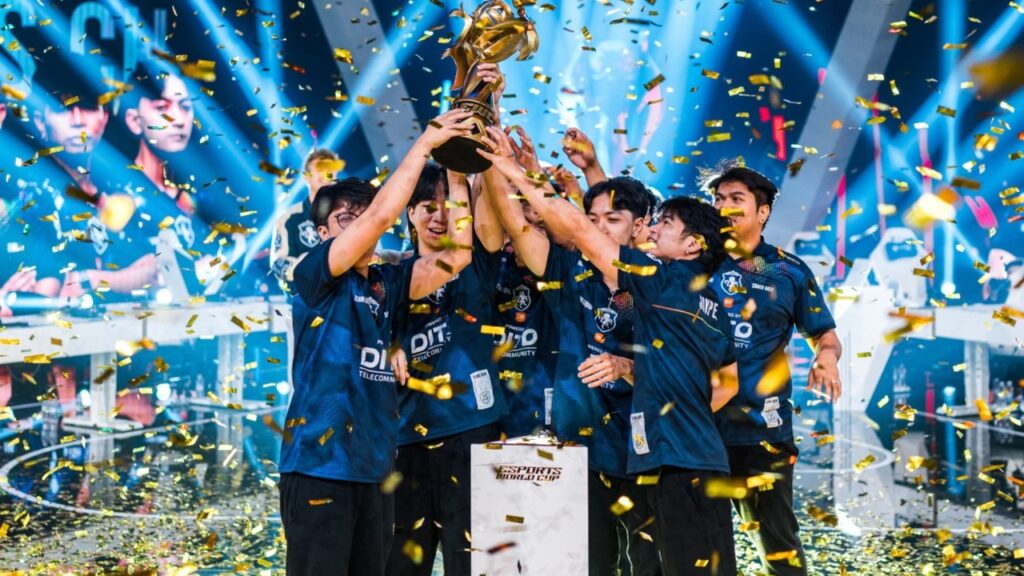
Filipino teams have dominated the M-Series since M2 in 2021, triumphing at six straight world championships through Aurora Gaming PH’s M7 victory in January earlier this year. More recently, the Philippines-Indonesia rivalry has become a fixture on MLBB’s biggest stage.
The last three M-Series World Championship grand finals have all featured teams from the two countries: AP.Bren against ONIC Esports at M5, Fnatic ONIC Philippines against Team Liquid ID at M6, and Aurora Gaming PH against Alter Ego at M7.
Aurora’s 4–0 victory over Alter Ego in Jakarta extended the Philippines’ winning streak. Still, repeated meetings between the two countries have given international MLBB a recognizable regional rivalry that a game update simply cannot manufacture.
MLBB’s audiences show the scale of its esports dominance
Those rivalries and established leagues turn regional loyalty into sustained viewership. In fact, the scale of MLBB’s esports audience is evidence enough of how powerful that combination has become.
According to Esports Charts, the MLBB M7 World Championship reached roughly 5.68 million peak viewers during its grand final in January 2026, growing 37% from M6 the previous year and becoming the most-watched mobile esports tournament of all time. More impressively, the huge audiences are not limited to global events.
MPL Indonesia Season 17 reached almost 3 million peak viewers, the second most-watched esports tournament in the first half of 2026. Meanwhile, MPL Philippines Season 17 peaked at around 1.69 million during its grand final. This shows that millions of viewers follow the regional leagues and teams all the way to the international stage.
MLBB’s hardest advantage to copy
MLBB’s biggest competitive advantage today is one that cannot be downloaded, developed, or copied. Competitors can reproduce its basic formula, offer better graphics and new heroes, or even build a technically stronger mobile MOBA. But none of that can recreate what MLBB has accumulated outside the game itself.
Nearly a decade of growth has created a layer of social capital that an MLBB competitor cannot build overnight. Millions of players already have friends in the game. Professional teams have established fan bases. Players have become celebrities whose names are recognized across borders.
Beyond that, there are domestic leagues with their own histories, rivalries, and storylines that fans have followed across multiple seasons and international championships.
Arena of Valor and League of Legends: Wild Rift illustrate how difficult it is to challenge that position. Both entered the mobile MOBA market with major publishers behind them, but neither has managed to displace MLBB’s position at the center of Southeast Asia’s mobile esports ecosystem.
As MLBB’s community has grown, simply offering a similar — or even technically stronger — alternative has become less likely to persuade players to start over elsewhere.
Why MLBB became Southeast Asia’s defining esport
MLBB‘s dominance in Southeast Asia was never the result of a single feature, hero, or tournament.
Its mobile-first design gave it the right foundation at the right time. Localization helped the game feel familiar across very different Southeast Asian markets. Its social features turned playing into a community activity, while professional leagues gave those communities players, teams, and national rivalries to support.
Over time, those advantages began reinforcing one another.
That is why MLBB‘s history may now be more important than any individual feature inside the game. Competitors can replicate the mobile MOBA formula, but they cannot recreate overnight the friendships, fanbases, rivalries, and shared moments that players have accumulated over almost a decade.
REFERENCES
- Southeast Asian Mobile Game Market Insights 2025 (Sensor Tower, 2025)
- Southeast Asia Gaming Market Size and Share Analysis (Mordor Intelligence)
- Is Mobile Legends: Bang Bang Indirectly Deepening Chinese Soft Power in Southeast Asia? (ISEAS-Yusof Ishak Institute)
- SEA of Opportunities: Exploring the Rise of the Southeast Asia Video Games Market (Niko Partners)
The post How MLBB built an esports empire across Southeast Asia appeared first on Esports Insider.
‘There’s no Brodie to fix All Blacks set-piece’
At odds with World Rugby’s views on scrum laws, Dave Rennie says the buck stops with him as New Zealand look to avoid more punishment from the Springboks on Saturday.
Last week’s 29-24 loss at FNB Stadium handed South Africa a 2-1 series lead in the Rugby’s Greatest Rivalry series, the Boks powering to victory on the back of a first-half penalty try and a ferocious second-half maul finished off by Malcolm Marx.
Speaking in the build-up to the finale, Rennie didn’t shy away from where the Kiwis came up short in Joburg.
KIWI SCRIBE: All Blacks can’t play with ‘big boys’
“I mean, the buck stops with me in the end. I think that scrum [last week]; you have a look at that scrum, we were poor and got punished,” he told the media in an online conference. “It’s a pretty easy decision for the referee, to be honest.”
The maul was equally costly, Rennie explained, pointing to a defensive read that broke down entirely.
“The maul, we competed in the middle and we’re supposed to compete at the tail on that one. The reason is, given the front, we can defend the front. But we went up in the middle and then we had no one in front of that maul once it started, and so we never recovered.
“Considering where that started and where that finished, we should do better.”
He admitted part of that breakdown comes down to experience missing from his pack.
“There’s no Brodie Retallick and Sam Whitelock out there who can say, ‘Oh, they’re defending a little bit differently, let’s go to this or that’.
“That’s where we’re at, and we’ve got to develop those guys quickly. We’ve got no option. This set-piece has to be better and so we can’t hide from it.”
JK: Carter defensive errors really cost us
Rennie, though, remains conflicted by World Rugby’s take on how the scrum is being judged.
“We can talk about scrums, but clearly our view and the view of World Rugby and the officials is different, so you just have to deal with that,” he said.
“They don’t see it the way we do and they’re the ones that matter on game day, so we will have to be better.
“I just don’t want it to be the big topic. We’ve got to be better. We’ve got to be more accurate and limit the number of scrums they have.
“I don’t really want to talk about the scrum because in the end that was not the deciding factor [last week]. That maul where they scored under the posts – that was a big moment in the game.”
Photo: Floris van Schouwenburg/Gallo Images
The post ‘There’s no Brodie to fix All Blacks set-piece’ appeared first on SA Rugby magazine.
Juventus : Manuel Locatelli forfait pour plusieurs mois
Coup dur pour la Vieille Dame. Touché au genou lors du match nul contre l’AC Milan (1-1), dimanche soir, le capitaine de la Juventus, Manuel Locatelli, souffre d’une rupture du ménisque et devra subir une intervention chirurgicale. Examiné ce mardi à Lyon par le spécialiste Bertrand Sonnery-Cottet, l’international italien devrait être absent entre trois et six mois, selon les informations de la presse locale. Une nouvelle tuile pour un effectif bianconero déjà fortement diminué au milieu de terrain.
Rupture du ménisque confirmée pour le capitaine
Les mauvaises nouvelles se poursuivent à la Juventus. Dimanche soir, lors du match nul face à l’AC Milan (1-1), Manuel Locatelli a été contraint de quitter ses coéquipiers après s’être blessé au genou droit. Examiné ce mardi à Lyon par le spécialiste Bertrand Sonnery-Cottet, le milieu de terrain de 28 ans souffre d’une rupture du ménisque nécessitant une intervention chirurgicale. Selon les informations rapportées par la presse italienne, son absence est estimée entre trois et six mois.
Un milieu de terrain décimé à quelques jours de Sassuolo
Cette nouvelle blessure vient alourdir une infirmerie déjà bien remplie à Turin. Khéphren Thuram est indisponible après son opération au genou, tandis que Kenan Yildiz est également absent pour plusieurs semaines. Weston McKennie et Pape Matar Sarr ne sont, eux non plus, pas encore aptes à reprendre la compétition. Une situation qui fragilise encore davantage l’entrejeu turinois à l’approche de la réception de Sassuolo, dimanche prochain.
Spalletti avec des solutions limitées
Avec Locatelli et Thuram indisponibles, tandis que McKennie et Sarr restent incertains, Luciano Spalletti voit ses options se réduire considérablement au milieu de terrain. Douglas Luiz et Teun Koopmeiners figurent actuellement parmi les principales solutions disponibles dans l’entrejeu. L’entraîneur bianconero devra donc composer avec un effectif fortement diminué pour les prochaines échéances.
The post Juventus : Manuel Locatelli forfait pour plusieurs mois appeared first on AfricaFootUnited.